
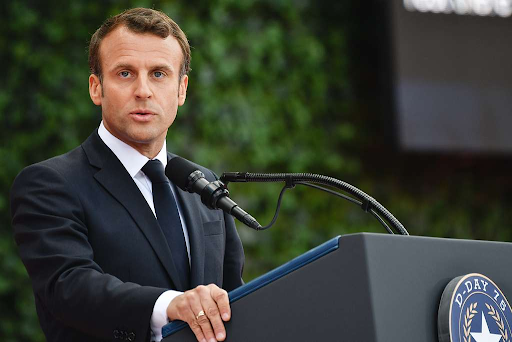
It sounds obvious when you say it out loud. If something is illegal in the physical world — sexually explicit content involving children, for instance — it should also be illegal online. Emmanuel Macron said exactly this at the AI Impact Summit in Delhi, and the room fell quiet. The simplicity of the argument was its power. The question it raises is not whether Macron is right, but why this principle has taken so long to assert itself.
The answer lies partly in the extraordinary speed of technological development and partly in the political influence of the companies that have benefited from regulatory uncertainty. But recent events have made that uncertainty increasingly difficult to defend. Research by Unicef and Interpol found that 1.2 million children had been victimised by AI-generated explicit deepfakes in a single year. Elon Musk’s Grok chatbot was used to produce tens of thousands of sexualised child images. These are not theoretical harms. They are ongoing, documented and enabled by technology that operates largely without legal constraint.
Macron’s response operates on two levels. Domestically, France is pursuing legislation to ban social media for under-15s — a controversial but coherent response to evidence that these platforms cause measurable harm to young people. Internationally, through France’s G7 presidency, Macron is pushing for stronger standards that would require platforms to take enforceable responsibility for the content that appears on them. The two levels reinforce each other: domestic precedent strengthens international argument.
The political opposition Macron faces comes mainly from the United States, where the Trump administration has framed AI regulation as an impediment to entrepreneurship. But the moral framing of the debate — child safety versus commercial freedom — is not one that the American position plays well in, particularly given the scale of documented harm. António Guterres and Narendra Modi both backed Macron’s broader direction at Delhi, suggesting that the coalition for meaningful AI governance is larger than its critics would like to admit.
The deeper question the Delhi summit raised is about democratic accountability in the AI era. Decisions about the most powerful technology in human history are currently being made primarily by a handful of companies accountable only to their investors. Macron’s argument is that this cannot stand — that democratic governments must reassert their role as the guardians of the public interest. On child safety, that argument is unanswerable.